Showing posts with label history. Show all posts

Friday, November 7, 2014

10 Types of Computers

There are many terms used to describe a computer. Most words imply size, the expected utility or computer capabilities. While the term computer can apply to almost any device that has a microprocessor in it.

Most people think a computer is a device that accepts user input via mouse or keyboard, processes it in some fashion and displays the result on the screen.

Do you know the various types of computers? Let us find out !. Here are the types of computers that are very popular and are used to facilitate human work.

1. PC (Personal Computer)
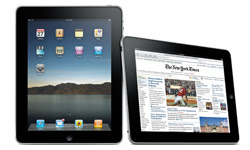
PC Personal Computer


The personal computer (PC) defines a computer designed for general use by a single person. Since Mac is referred to as a PC, most people associate with the term that is running the Windows operating system. PCs were first known as microcomputers because of the type of computer that is complete but made on a smaller scale than other types of larger computers and are used by most people.

2. Desktop
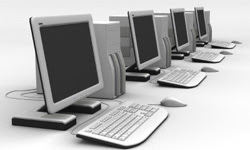
Desktop
  Desktop


A PC that is not designed for portability is a desktop computer. Desktop system is a type of computer used in a permanent location. Most desktops offer more power, storage and versatility for less cost than other types of portable computers.


3. Laptop
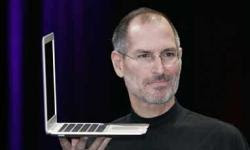
Laptop
  laptops


Laptops are also called Notebook. Laptops are portable computers that integrate the display, keyboard, pointing device or trackball, processor, memory and hard drive all in a battery-operated package slightly larger size than the average hardcover book.


4. Netbook
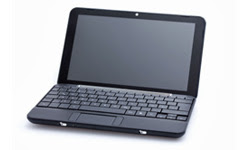
Netbook
netbook
  

Netbook is an ultra-portable computer that is smaller than a traditional laptop. Cost-effectiveness is much cheaper when buying a netbook (about $ 300 to $ 500) compared to almost all new laptops will be found in retail outlets. However, the internal components netbook 'less powerful than regular laptops.


5. PDA
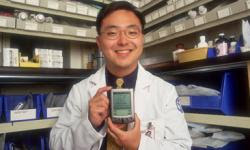
PDA
  PDA


Personal Digital Assistants (PDAs) with integrated computers that often use flash memory instead of a hard drive for storage. These computers usually do not have keyboards but rely on touchscreen technology for user input. PDA is usually smaller than a pocket dictionary book, very lightweight with a reasonable battery. Version is slightly larger and heavier than the PDA is a handheld computer.

6. Workstation
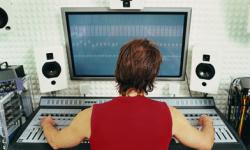
</span></b><b><span id=
Workstation

Another type of computer workstations. Workstation is a computer desktop that has a more powerful processor, additional memory and improved ability to perform tasks specific groups, such as 3D Graphics or game development.


7. Server
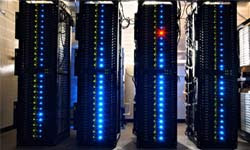
</span></b><b><span id=
Server
  

A computer that has been optimized to provide services to other computers over a network. Servers usually have powerful processors, lots of memory and large hard drive.


8. Mainframe
</span></b><b><span id=
Mainframe

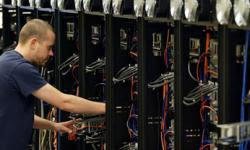
In the early days of computing, a large mainframe computer can fill an entire room or even an entire floor! At the moment the size of computers has been reduced while power has increased. You'll still hear the term mainframe is used, especially in large companies to describe the huge machines processing millions of transactions every day.


9. Supercomputer
</span></b><b><span id=
Supercomputer

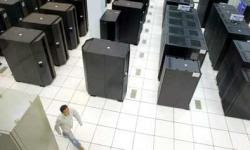
Type of computer usually costs hundreds of thousands or even millions of dollars. Although some supercomputers are single computer systems, largely composed of multiple high performance computers working in parallel as a single system. The most famous supercomputer built by Cray Supercomputers.


10. Wearable Computer
</span></b><b><span id=
Wearable Computer

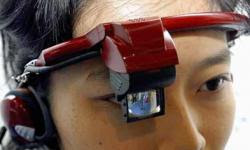
The latest trend in computing is the computer used the human body. Basically, general computer applications (e-mail, databases, multimedia, calendar / scheduler) are integrated into watches, cell phones, visors and even clothing.

What Is a Computer?


What Is a Computer?? Want Tau Definition or Definition Computer ?? Let's look at the bottom of this article:

According Blissmer (1985), computer adalahsuatu electronic device that can perform several tasks, which receive input, process the input according to the instructions given, save the commands and its products, and provides output in the form of information.

Meanwhile, according to Sanders (1985), a computer is an electronic system to manipulate data quickly and accurately as well as designed and organized in order to automatically receive and store input data, processes it, and produces output according to the instructions that have been stored in memory. And many more experts are trying to define differently about computers. However, in essence, it can be concluded that the computer is an electronic device that can accept input, process the input, provide information, using a program stored in the computer memory, it can store the programs and the results of processing, and works automatically.

From the definition, there are three important terms, namely the input (data), data processing, and information (output). Data processing using a computer known as electronic data processing (EDP) or elecronic of data processing (EDP). Data is a collection of events is lifted from a reality (facts), can be numbers, letters, special symbols, or a combination of all three. Data still not able to tell much that needs to be processed further.

Data processing is a process of manipulation of data into a form that is more useful and more means, in the form of an information. Thus, information is the result of a data processing activities that provide a more meaningful form of a fact. Therefore, the electronic data processing is the process of manipulation of data into a more meaningful form of an information by using an electronic device, namely a computer.

According to the Annual Computer (Robert H.Blissmer), a computer is an electronic device that can perform several tasks as follows:
receive input
Process input earlier in accordance with its program
Storing commands and the results of processing
Provide output in the form of information
According to the book Computer Today (Donald H.Sanders), a computer is an electronic system to manipulate data quickly and accurately as well as designed and organized in order to automatically receive and store input data, processes it, and produces output under the supervision of a step-by-step instructions that program stored in memory (stored program).

According to the book Computer Organization (VC Hamacher, ZG Vranesic. SG Zaky), the computer is a fast electronic calculating machine that can receive digital input information, process it in accordance with a program stored in memory (stored program) and generate output information.

According to the book Introduction To The Computer, The Tool Of Busines (William M.Fouri), a computer is a data processing (data processor) that can perform large calculations and fast, including large arithmetic or logic operations, without intervention from humans operate during processing.

According to the book Introduction to Computers (Gordon B. Davis), a special type of computer is a counter that has a definite certain properties.
From the definition obtained from a variety of books, it can be concluded that the computer is:
electronic equipment
Can receive data input
Can process data
Can provide information
Using a program stored in the computer's memory (stored program)
Can store programs and processing results
Work automatically
While the so-called program is a detailed set of instructions or orders which has been prepared so that the computer can perform its functions in a way that is certain.

Along with the development in technology it is possible that Definition The computer itself will change according to the context later. Interested about the computer buddy can also read the history of Computer and understanding of computer hardware.

Types of Computers


Computers have penetrated into the various sectors of our lives, not just used by the office, academics, students, The children are already familiar with this computer. Simply put, a computer may be defined as an electronic device that accepts input (can be input from the keyboard, mouse, fingerprint, retina of the eye, etc. and then processed by the processor and displayed on a monitor or in hardcopy (printer). Lots of division or criteria attached to the computer, we discuss the following eight types of computers.


1. PC or Personal Computer

As the name implies the personal computer, the PC is a computer that is intended for the use of one person or privately owned. Before this PC appears, tangible computer formerly very large, so it is only owned by a particular company only. The first PC that diproduki named Altair MITS in 1975.

2. Computer Desktop

That computer is not designed to be moved, move, or specifically designed to be placed somewhere as above workbench. This kind of computer is very much on the market, especially among colleges, offices and companies.

3. Laptop

Formerly the term is different from the notebook laptop in terms of size, but now the laptop or notebook refers to the same purpose, namely portable computer (portable) that integrates directly with a monitor, keyboard, mouse pad / trackbal, processor, harrdisk, memory and other peripherals with a small size and light weight. Of the ability to even exceed the desktop computer or PC ..

4. PDA, Personal Digital Assistants

PDA is a sophisticated computer that uses flash memory as a storage medium replacement. PDA does not have a keyboard, but uses touch screen technology (touchscreen) as an input medium. PDA has a very small size, slightly above the size of a mobile phone and can be easily taken anywhere.

5. Computer Workstation

Workstation is actually a desktop computer that has major advantages in terms of the ability of the processor, large memory, and ability to run applications that require high performance, such as three-dimensional applications, graphics, multimedia and so forth.

6. Computer Servers

The server is a computer intended to provide services to other computers (clients) on a network. The server machine has a powerful processor, large memory and a larger hard drive capacity.

7. Mainframe Computer

Is a computer with a large size that is able to serve hundreds of application programs simultaneously, supports dozens of different programming languages, capable of storing and accessing the library routine with a large capacity, capable of serving hundreds of transactions simultaneously, even more and other advantages. This computer usually serves as a data center at a large company. But with the times, the latest computers today will gradually be able to compete with the advantages of mainframe computers. To measure was referred to as a mini computer and the smaller size is called the micro-computer.

8. Wearable Computer

Wearable Computer is the latest development in the field of computers, computer peripheral that integrates like clothes only. Applications that are commonly used such as email, databases, multimedia, calendar, integrated directly with watches, cell phones or other forms. So the computer is integrated into our daily lives.

Computer History and Development of Computer

The origin of the word computer is used to visualize the people who have jobs do arithmetic calculations. However, current computer to a device means the machine.

In the most basic sense, a computer is a device that helps humans to perform various calculations. In this case, the abacus is the first computer that is used to perform basic operations artimatika.

In the history and development of the computer, or Abacus Abacus is the beginning of the birth of the computer. Computers in conducting the process in electronic form, which allows to perform calculations wider and faster. Until now the computer can process images, voice, text and non-numerical form other data. To remember all of it can not be separated from the basic numerical calculations. Images, sounds and more simply a abstaksi of crunching numbers in a machine. In computing the numbers of "1" and "0" representing a combination of active and non-electric active. In other words any images, sounds, text and other computer has the appropriate binary code.

First Generation Computers (1940 - 1950)

Sejarah Komputer Generasi Pertama ENIAC
First Generation Computers (1940 - 1950)

 First generation computers used vacuum tubes that some large and complex as crystal diodes, relays, resistors, dancapacitors requiring electric power of 150 kilowatts. The first electronic computer which used to be common that the ENIAC (Electronic Numerical Integrator And Computer). Already in digital form, but has not been used as a binary code of the process. Used to solve the complete range of computing problems. Programmed using plugboard and switches, which already supports input and output of the IBM card.
The first electronic computers were used for non-public, namely ABC (Atanasoff-Berry Computer), ten British Colossus computers, german Z3, LEO, UNIVAC,
 and the Harvard Mark I.

Second Generation Computers (1955 - 1960)

Sejarah Komputer Generasi Kedua IBM1401
Second Generation Computers (1955 - 1960)

  Second generation computers emerged with the invention of the transistor, which then began to replace vacuum tubes in computer design. With transistors, power, heat and form much smaller than the first generation of computers. However, it is still much larger with today's computers.
Computers with the first transistor was made at the University of Manchester in 1953. The most popular second-generation transistor computer was the IBM 1401. IBM also created the first drive (storage media) in 1956, known as the IBM 350 RAMAC.

Third Generation Computers (1960)

Sejarah Generasi Komputer Ketiga IBM System 360
Third Generation Computers (1960)

  The invention of Integrated Circuits (IC) or also known as microchips, paving the way for a third generation computer or computers that we are familiar with today. Shaped much smaller with the previous generation of computers, with more transistors and microchips embedded into the sole. In the development phase, a second-generation computers still survive.
The first time the emergence of minicomputers based on both transistors and microchips such as the IBM System / 360. This computer is much smaller and cheaper than previous generations. Computer Generation Ketigadikenal as mainframe computers. Minicomputers can be seen as a bridge between the mainframe and microcomputer as proliferation in the development of computers.

Fourth Generation Computers (1971)

Sejarah Komputer Generasi Keempat Mikrokomputer
Fourth Generation Computers (1971)

  Microchips based Central Processing Unit (CPU) The first, consisting of several microchips for different CPU components. The push for greater integration and miniasturisasi led to the single-chip CPU, the CPU where all the necessary components incorporated into a single microchips disebutmicroprocessor. The first is the Intel 4004 microprocessor.
The advent of the microprocessor spawned the evolution of the microcomputer, a form that would eventually become the personal computer as we know it today.

Thursday, November 6, 2014

IT Paradox - Developments Between IT and the fact


IT stands for Information Technology or Information Technology is often called a science in terms of a collection of digital information or data that is processed to obtain a solution to solve the problem.
While IT Paradox is a phenomenon that contradicts the IT development with actual reality. In this case, IT is expanding rapidly without being followed by the fact that support these developments.

Today, the field of IT to be excellent in the community. Even indirectly we have been immersed in the field of IT competition, competing either as a user or even compete as the creator of a product in the IT field. Competition in the IT field has grown in various aspects, ranging from aspects of education, government, and even the business world.

Competition in the field of IT in the educational aspect looks at many universities sprung open Informatics study program, interest in the science of informatics as lively or even has become a trend. Because many are thinking, "IT staff are now much needed" so many who choose this field in order to gain knowledge will easily get a job. But if after entering the world of IT, we are able to compete? Many phenomena that occur between learners / IT students even not able to absorb the real IT knowledge, until college so delayed. Precisely that is the paradox in IT.
If you think "without graduating from college we would not be able to compete in the world of IT" is WRONG. Mengacalah the following figures: Bill Gates, Steve Jobs, Mark Zuckeberg. They are one example of the students dropped out (DO), or in other words did not graduate from college. But they are able to compete in the world of IT. Being able to put a name to the character that plays a role in the development of IT.

In the business world, competition is common in IT manufacturers such as IBM, Apple, Microsoft, Google, and others. All competing to develop each product that nobody was able to compete, either in terms of software and hardware. War of the products operating system, smartphone, laptop, or tablet has been made public as a slave IT. How not, let's say a new android product appeared, soon appeared the most recent version. And shifting the old product. And most people will look for the latest version and sell the old one. This is actually enslaved community in IT development.

We see the success of the company Google Inc., which has become the Internet giant and gadgets. Who does not know that Google has created a search engine (search engines) and the Android operating system? IT advances are not enslave humans. Precisely the man himself who enslave themselves to the development of IT. Why should it change the gadget with the new android version, if you just want to get more features. Why do not we go jump develop android application? that our participation in the world of IT. Since we know that the android is open source, and we can put up a role as a developer.

Utilization of IT in the field of trade seen in the concept of e-commerce or e-business with an online shop for trade intermediaries. Already many emerging online stores that circulated in cyberspace. Which is a paradox in this case is simply a fraud occurs, so many people who do not believe in such online sellers. This occurs because the trading process without face to face and is often harmed consumers because they have to transfer a sum of money before the goods are shipped by the seller. Maybe this is what the constraints hampered the development of e-commerce.

If the development of e-commerce creates negative things such as fraud and so forth. We must follow the example of Amazon.com that has managed to become a trading company that is able to take advantage of e-commerce well.
With the development of IT has changed the consumption pattern of the society. Most people are willing to spend more money just to buy a smartphone that has a lot of features, but it takes only features sms and calls only. Though the smartphone can be used more than just sms and calls only. Why not just buy a normal mobile phone that is only used for sms and calls only? That is precisely the paradox in the IT field.

It was back on each individual person, only those who prepared 0rang that can utilize the IT development as well as possible. Because each of the times, evolving technology is also used, therefore make ourselves be personally prepared in the development of these technologies. And can take advantage of technological developments as well as possible.
Actually that is wrong is not the development of IT, one is the use of IT itself. If the development of IT has penetrated into every aspect of life, indirectly we have to feel the benefits of IT development itself.

Preparedness is the key to being a pioneer or leader who co-developed the technology. Because the technology has no limits, will continue to grow until eventually when the technology could no longer develop, then that's the end of the world. Strong in the IT world he is only able to compete and ready to engage in the development of IT as well as possible.

Recent IT Developments in Indonesia


The role of IT is increasingly important at this time because we've entered the era of information (information age) Information The technology is a technology used for data processing, including processing, obtain, compile, store, manipulate data in different ways to produce quality information, ie information that is relevant, accurate and timely, which is used for personal, business, and government and is a strategic information for decision making. This technology uses a computer to process the data, the network system to connect one computer to another computer as needed, and telecommunications technology is used so that the data can be distributed and accessed globally.

Information technology plays a role in many areas, among others:

The field of education (e-education).
Globalization trends have triggered a shift in education from conventional education face to face in the direction of a more open education (Mukhopadhyay M., 1995). As an example we look at the French project "Flexible Learning‿. This is reminiscent of Ivan Illich forecast early 70s on "Education without school (Deschooling Socieiy)" which is the extreme teachers no longer needed.
Bishop G. (1989) predicted that the future of education will be supple (flexible), open, and accessible to anyone that needs regardless of the type of factors, age, and previous educational experiences.
It can be concluded that with the influence of globalization, the future of education will be open and two-way, diverse, multidisciplinary, and work productivity related to "when it juga‿ and competitive.
Trend of education in Indonesia in the future are:
- Development of open education by distance learning mode (Distance Learning). Ease to organize open and distance education should be included as a key strategy.
- Resource sharing among agencies of education / training in network
- Libraries and other educational instruments (teacher, lab) changed into a source of information rather than a bookshelf.
- The use of interactive information technology devices, such as CD-ROM Multimedia, in education gradually replace TV and video.
With the development of information technology in education, so when it is already possible to place a distance learning using the internet to connect between students and lecturers, see the value of online students, financial checks, view class schedules, send the tasks assigned faculty and so on, all of it has to do.

In the Government Sector (e-government).
E-government refers to the use of information technology by the government, such as the use of the intranet and the Internet, which has the ability to connect the purposes of residents, businesses, and other activities. Can a business transaction process between the public and the government through system automation and internet networks, more commonly known as the world wide web. At the core of e-government is the use of information technology can improve the relationship between the government and other parties. use of information technology is then produced new forms such relation: G2C (Governmet to Citizen), G2B (Government to Business) and G2G (Government to Government).
Benefits of e-government can be felt include:

(1) The service of better service to the community. Information can be provided 24 hours a day, 7 days a week, without having to wait for the opening of the office. Information can be sought from the office, home, without having to physically come to the government offices.

(2) the improvement of the relationship between government, business, and the general public. Openness (transparency) it is expected that the relationship between the various parties would be better. This openness eliminate suspicion and resentment on all sides.

(3) Empowering communities through information that is easily obtained. With sufficient information, the public will learn to be able to make their choice. For example, data about the school: the number of classes, student capacity, the passing grade, and so on, can be displayed online and used by parents to choose the right school for their children.

(4) The implementation of a more efficient government. For example, the coordination of government can be done through e-mail or even video conferencing. For Indonesia, the area is very large, it is very helpful. Debriefing, coordination, discussion among local leaders can do without all must be at the same physical location. No longer any need to fly to Jakarta for a meeting that lasted only one or two hours.

Finance and Banking

We have many economic actors, especially in the big cities that no longer use cash in payment transactions, but have used modern banking services.
Modern banking services are only available in big cities is understandable because of the current economic growth is still concentrated in large cities only, which causes the velocity of money is also concentrated in the big cities. So the banking sector was rather slow in its expansion into the regions. This is somewhat due to the current state of infrastructure in addition to the geographical aspects of Indonesia's unique and extensive.
To support the successful operations of a financial institution / bank such as banks, certainly needed a reliable information system that can be easily accessed by customers, which in turn will depend on the technology of information online, for example, a customer can withdraw money wherever it is located as long as no ATM service from the bank, or a customer can check balances and transfer money to another account in a matter of minutes, all transactions can be done.
Telematics technology and infrastructure development in Indonesia will greatly help the development of this industry in the financial sector, such as the expansion of the scope of business by opening branches in the area, as well as the exchange of information among insurance companies, brokerage, banking, and other financial institutions.
Banking and financial institutions have been strongly influenced by the development in information technology products, even they can not operate again without the information technology. This sector requires the development of products in information technology to deliver their services to their customers.
Generation - Generation Computers

Computers that we find today is actually the development and refinement of the previous generation komputer2, calculations are automatically performed and was asked in 1812 by the English mathematician, Babbage auries. One machine that was created is the diference Engine, which is a forerunner to the computer meisn known at this time, the machine is used for mathematical calculations Table 2.

The first generation (1945-1959)
designed by Prof. Dr. John watcly and prospects Ecker computer is ENIAC (Elektronic numenal's calculator)
removed from the vacuum tube electronics devices (Vacuum tube) with Segal shortcomings are physically large but very slow in processing the data, produced by Ibni Burrugis, RCA and hengwell

The second generation (1959-1965)
Beginning with the discovery of small-sized transistors instead of vacuum tubes with a much larger capacity, although physically small, this kind of computer is the IBM 1400 series, 7070, 1600, and UNIVAC horewell

The third generation (1965-1973)
With the technological advances in the field of electronics, experts have been able to integrate a number of series transistors in the form of small chips

The fourth generation (1973-1978)
Experts remind teknologi2 a number of electronic circuits which can diintregaikan preformance chip form

The fifth generation (1978-present)
Computers today is rapidly developing as the development of science and technology industry
Progress to Laptop Computers

The use of computers among households, offices and schools called the PC (Personal Computer).

Then evolved many computers began to be used to the size that can be placed on top of a table (Desktop Computer).

This development is not just enough to get there emerged was a portable computer (laptop) computers that can be taken anywhere just by putting it in a bag.

This development is a microprocessor-based development. Many vendors are developing to create new processors that have a faster kinnerja namely IBM, Intel, Cyrix, and AMD.

This development is also accompanied by developments in software like operating systems and applications. Banya network-based operating systems and multimedia.
With the development of computer makes absolutely mushroomed among the people of the world, both for personal and work world. In fact, to meet the growing needs of people, this time the computer has been developed in the direction of Mobile Computing such as handheld computers.

History and Evolution of Software Engineering


Software engineering has evolved since it was first created in the 1940s until now. The main focus of development is to develop practices and technologies to improve the productivity of software developers practitioners and the quality of applications that can be used by the user. In 1968 and 1969, the NATO Science Committee sponsored two conferences on software engineering, which gives a strong impact on the development of software engineering. Many consider that the two conferences is what marks the official beginning of the software engineering profession. The term software engineering itself was first used in the late 1950s and early 1960s. At that time, there was a sharp debate about the engineering aspects of software development. In the 1960s and 1980s, many of the problems found by software development practitioners. Many projects that fail, until the time is referred to as the software crisis. The case of the failure of software development occurred from the project that exceeds the budget, up to a case that resulted in physical damage and death. One well-known case, among others, due to the explosion of the Ariane rocket software failure.
Various techniques, methods, tools, processes are created and claimed to be the ultimate weapon to solve the case. Starting from structured programming, object oriented programming, software development helper tools (CASE tools), a variety of standards, UML to formal methods hailed as the ultimate weapon to make the right software, within budget and on time. In 1987, Fred Brooks wrote an article No Silver Bullet, which berproposisi that no single technology or practice that is able to achieve a 10-fold improvement in the productivity of software development within 10 years.
The most primitive form of software, using Boolean algebra, which are represented as binary digits (bits), which is 1 (true / on) or 0 (false / off), search is definitely very difficult, so people started to classify these bits become nible (4 bits), bytes (8 bits), word (2 bytes), double word (32 bits). Groups in stacking these bits into structures such as storage instructions, transfer, arithmetic operations, logic operations, and the shape of these bits is converted into code that is known as an assembler. Machine code itself is still quite difficult because it demands to be able to memorize the code and format (rules) are quite confusing writing, of the problem, he went on a high-level programming language such as human language (English). Currently, software development has become a very complex production process, with the sequence of a long process involving dozens or even hundreds of people in the making.
Pioneer era
This form of software in the beginning is the connections between the inner cable into the computer, the following figure shows the people who are using the computer. Another way to access the computer using punched card is a card in the holes. The use of the computer when it is done directly, a program for a machine for a particular purpose. In this era, the software is an integral part of the hardware. The use of computers is done directly and do results completed in the form of a computer print out. The process is done in the form of lines of computer instructions sequentially in the process.
Stable era
In the era of stable use of computers has much in use, not only by the researchers and academics, but also by industry / company. Software companies have sprung up, and a software can perform several functions, of this software began to shift into a product. Command lines of software which is run by a computer is no longer one-on-one, but it's been as much a process will be undertaken simultaneously (multi-tasking). A software tool capable of resolving multiple users (multi-user) rapidly / instantly (real time). In this era began in the know database system, which separates the program (processing) with the data (which is in the process).
Micro era
In line with the breadth of PCs and computer networks in this era, the software is also evolving to meet the needs of individuals. The software can differentiate into the system software responsible for handling internal and application software that is used directly by the consumer for a particular purpose. Automation is in software leads to a kind of artificial intelligence.
Modern Era
Currently the software is found everywhere, not just on a supercomputer with 25 processors, a computer equipped with a genggampun have software that can synchronize with a PC. Not only computers, even equipment such as telephone, TV, to washing machines, air conditioners and microwave, had been induced in the software to manage the operation of the equipment. And that great again is any equipment that will lead to someday be able to connect to each other. Making a software no longer work segelentir people, but it has been the work of many people, with some stage process involving a variety of disciplines in its design. Show the level of intelligence in software is increasing, in addition to technical problems, the software is now beginning to recognize the voice and images.

Development of IT


IT Developments in Indonesia

As time, it did not feel we have to live in an age filled with sophistication and everything is very practical. Everyone is vying to be able to create new things and to facilitate his work. It also includes the development of IT is the fastest growing in the world, especially in our beloved country, the Republic of Indonesia.
Information Technology is a technology used to process the data, the processing, obtain, compile, store, manipulate data in different ways to produce quality information. information that is intended is accurate, relevant, and timely, which can be used for personal, business, and government. This information should also strategic value so that it can be used in decision making.

            Today the role of IT in human keidupan is increasingly important. Because along with the development of the IT man did a lot of work in front of a computer or by using a cell phone for communication. With the advances in technology make it easier for humans and serasadunia work in our grasp. In addition, the development of IT is also very fast, so it must always follow its development.

            The development of information technology in Indonesia is strongly influenced by the ability of the human resources in understanding the components of information technology (hardware, software, computer network systems, and telecommunications systems). To build IT facilities, Indonesia still relies heavily on investors.
If we make the chronology of the development of IT in Indonesia from ancient times to the prediction of IT development in Indonesia, among others:

1. The initial generation of Information Technology.
           In Indonesia, in the past, long-distance communication is done by correspondence. Although there is no postal system, but mail delivery system has been in place for decades. Tknologi information system in Indonesia began to experience growth in 1855, or precisely on October 23, 1855 when the Dutch government opened the first telegraph line in Indonesia. Since then, the telegraph have been widely used in Indonesia.

              On October 16, 1882, local telephone networks were first used in Indonesia by a private party that gets the concession for 25 years. Since then, the companies began popping up telephone network in Indonesia. However, in the early days of this, companies are only open telephone line in big cities only. In 1906, the government took over and monopolize all the corporate telephone network, the telephone network except Keretea Fire Company Deli. In 1967, the telecommunications company successfully completed the construction of telecommunications networks archipelago that includes the Sumatra project microwaves, and microwaves across eastern Indonesia. On July 9, 1976, Indonesia launched a satellite then palapa. And began a new round of development of information technology in Indonesia is very fast moving and rapidly since the launch of this satellite.

              Indonesia began to recognize the Internet in the 1990s. Internet users in Indonesia in 1988 using CIX (England) and Compurserve (US) to access the Internet. Internet is also increasingly being used currently and is growing by leaps and bounds.

2. Information technology today.
         Today, we have entered the era of globalization with the development of information technology is very rapid. In Indonesia the information from different parts of the world can be accessed quickly and easily. The internet facility has changed the paradigm of society became more modern and practical. Internet is now more easily accessible. In addition to the cafe facilities more and more, people are also able to access the Internet via a PC or laptop at home, or to take advantage of hotspots, or even using a phone. Not only that, the internet has been used as a medium of learning, business, military, and various other fields. The Indonesian government has made the internet as an important part in many fields. By utilizing the Internet, Indonesia has taken a step forward to further developing and developed in the future.

3. Information Technology in the future.
           Seeing the development of information technology, various predictions about the development of technology more and more expressed. But, of course, there are various factors that will influence the development of the information technology. Either support or inhibit the perkambangan. Things such as the government's financial capability and affordability of remote areas will greatly affect the development of the information technology. In the past, it has been a lot of figures that express predictions about the development of information technology. As what was said Mason R. (1994) who found the future of education will be determined by the information network that allows interaction and collaboration, rather than the school building. However, technology will continue to widen the gap between rich and poor in. Or thing expressed by Tony Bates (1995) that technology can improve the quality and range when used wisely for education and training, and has great significance for the economic well-being. What is clear, whatever happens, information technology will still be an important part in human life. In Indonesia in particular, in all corners of the world in general.

              Lately, the role of IT in transportation services even been able to feel. For example, the existence of a special card issued by some private banks that can be used to pay tolls, buy fuel, busway ticket purchase and train.

              In the world of education, especially at the college level, the use of IT is realized in a system called electronic university (e-University). This development was carried out in support of education, so as to provide better information for the community, both within and outside the university via the internet. Exemplarily other educational services that can be implemented by means of the Internet by providing online course materials and the course material can be accessed by anyone who is in need.

              With the rapid development of IT, should also be balanced with awareness for the use of IT for the benefit of a positive. Therefore, not a few IT experts who use it for evil. Many porn sites are more intense circulation. Another example is the "fever" friendship sites are often misused. Until the purchase transaction girl through cyberspace. It certainly can affect the development of children and youth in our country. And the need for supervision of the competent authority that the negative impact of IT can be reduced. Because teens are now inclined to use technology in a negative direction, and it caused their souls are still unstable and the need for educators and mentors to steer them in the right direction so that we can promote Indonesia in the future.

               Many of the benefits that I can feel with the development of IT including help me in doing assignments, easily transfer money, add friends through social networks, to communicate very easily and quickly. Moreover, with the development of IT, it can promote the economy of Indonesia, there are now also online business, transactions over the internet, as well as many other benefits.
Similarly, descriptions of the author of the IT developments in Indonesia and the chronology of its development and also reviews the positive and negative impacts of future IT developments on the progress of the Indonesian nation.

History of Information and Communication Technology

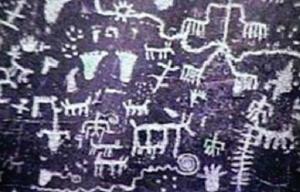
The development of human civilization is accompanied by the development of the delivery of information (hereinafter referred to as information technology), ranging from images that is meaningless in the walls of the cave, laying a milestone in the form of inscriptions, until the introduction of the world flow of information known as the Internet .

1. Prehistoric Period

In this day and age, information technology and communications made by humans serve as a system for the recognition of human forms known. To illustrate the information obtained, they describe it on the walls of the cave on hunting and prey animals. At this time, people began to identify objects that are around their neighborhood, then describe it in the wall of the cave where he lives. Their initial communication in this age range in the form of voice only grunts and use hand signals.

In prehistoric times began to be created and used tools that produce sounds and gestures, such as drums, trumpets made of animal horns, and smoke cues as a means of giving warning of danger.

Piktografi
  Piktografi  
a. 3000 BC

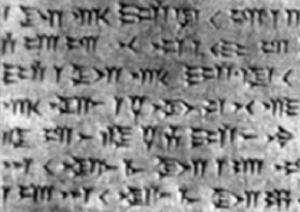
For the first time, the writing used by the Sumerians using symbols formed from piktografi as letters. Symbols or letters is also to have a sound (mention) are different so that they can be words, sentences, and language.


b. 2900 BC
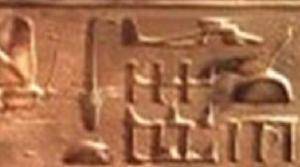
Hieroglif
Hieroglif


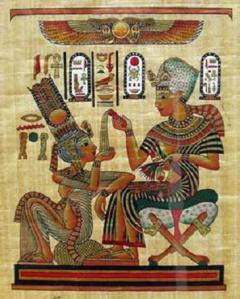
In 2900 BC, the ancient Egyptians used hieroglyphics. Hieroglyphics is a language of symbols, where each phrase is represented by a different symbol. If these symbols are combined into one circuit, it will produce a different meaning. Hieroglyphic writing and the language is more advanced than Sumerian writing.
Serat Papyrus
Serat Papyrus

c. 500 BC

In 500 BC, people have to know how to make papyrus fibers from trees growing around the river Nile. Papyrus fibers can be used as paper. Paper made from papyrus tree fibers become a medium for writing or media to convey information that is more powerful and flexible than the previous slab of clay is also used as a medium of information.


d. 105 M

Kertas yang ditemukan Bangsa Cina
     The Chinese papers found
           

At this time, the Chinese managed to find the paper. The paper discovered by the Chinese in this period is the paper we know today. This paper made from bamboo fibers are crushed, filtered, washed, and then flattened and dried. The present invention also allows the printing system is done by using a wooden block ditoreh and covered by ink or as we know it with the cap system.

2. The Modern Period (1400 AD s.d. Now)

a. In 1455

In 1455, for the first time Johann Gutenberg developed the printing press by using the letter plate made of iron and can be changed in a frame made of wood.

b. 1830

Augusta Lady Byron wrote the first computer program in the world. He worked with Charles Babbage's analytical engines designed to be able to enter data, process data, and produces output in the form of a card. This machine is known as the first form of digital computers, although how it works is more mechanical than is digital.

c. in 1837

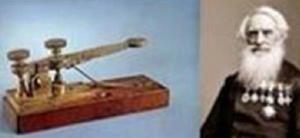
Telegraf dan Penemunya (Samuel Morse)
Telegraph and inventor (Samuel Morse)


Samuel Morse developed the telegraph and Morse code language with Sir William Cook and Sir Charles Wheatstone. Morse uses simple codes to represent the messages to be sent by using an electrical pulse through a single cable. However, the signals can be sent to either just be within 32 miles. For longer distances, the received signals become too weak to be recorded. Then, Morse build relay equipment that is placed at every 32 km from the station signal. The relay serves to reiterate the received signal and sends it back to the next 32km. Relay consists of electromagnetically operated switch. Telegraph system then immediately used for businesses that require a fast message delivery over long distances, such as newspapers and messages for train travel.

d. 1877

In 1877, Alexander Graham Bell invented and developed the first phone that is used in general. In 1879, the telephone dialing system began using numbers that replaces the system call name. This prevents the operator is not familiar with all the customers. Telephone numbering system using letters and numbers, where phone numbers using a system of two letters and five digits.

e. 1889

Kartu Perforasi
 Perforation card
                 

In 1889, Herman Hollerith applies the principle of perforated cards to perform calculations. His first task is to find a faster way to perform calculations for the US Census Bureau. Census conducted in 1880 took seven years to complete the calculation. With growing population, the Census Bureau estimated that it would take ten years to complete the census count.

Hollerith using perforated cards to enter census data which is then processed by the tool mechanically. A card can store up to 80 variables. By using these tools, the census can be completed within six weeks. Besides having the advantage in the areas of speed, the card serves as data storage. The error rate calculation can also be reduced drastically.

f. 1931

In 1931, Vannevar Bush created a calculator to solve differential equations. The machine could solve complex differential equations that is considered complicated by the students. The machine is very large and heavy as hundreds of teeth and shaft needed to perform calculations.

g. In 1939

In 1939, Dr. John V. Atanasoff and Clifford Berry assisted by successfully creating the first digital electronic computer. Since this time, the computer continues to experience growth to become increasingly sophisticated. Regarding the history of computer development is described in the next section.

h. Year 1973 - 1990

At this time, the term Internet was introduced in a paper on TCP / IP. Literally, the internet (interconnected networking) is defined as a series of computers connected in a series. The series centers that make up the Internet began in 1969 as the ARPANET was built by ARPA (United States Department of Defense Advanced Research Projects Agency). Some initial investigations contributed by the ARPANET of which is kaedah circuit without center (Decentralised network), queuing theory, and rules exchange packets (packet switching).

In 1981, the National Science Foundation to develop a backbone called CSNET 56 Kbps capacity for each institution in the government.

On January 1, 1983, the ARPANET protocol to exchange a series of head, from NCP to TCP / IP. This is the beginning of the Internet as we know it. Later in 1986, the IETF developed a server that serves as a means of coordination among DARPA, the ARPANET, DDN, and Internet Gateway. In the 1990s, the Internet has evolved and many users connect computer networks that exist.

i. 1991 - Present 

Business systems in the IT field first occurs when CERN charge a fee from the members to cope with the cost of operations. In 1992, the community began to form the Internet and the introduction of the World Wide Web (www) by CERN. In 1993, NSF established InterNIC to provide services regarding internet directories and data storage as well as a database (by AT & T), registration services (by Network Solutions Inc.), and information services (by General Atomics / CERFNET). In 1994, the growth of the Internet drove very fast and began reaching into many aspects of human life and to be a part that can not be separated from humans. In 1995, public companies began to be allowed into the provider to purchase at the backbone network. This step initiates the development of information technology, especially the Internet and research to develop systems and tools that are more sophisticated.